Category: Scam Watch & Protect

Real-world scam examples, breakdowns, and prevention tips to help people recognize fraud before it causes harm.

  • Sponsored Search Scams

    Sponsored Search Scams

    Sponsored Search Scams: Now Scammers Are Buying Ads to Trap Us.

    Sponsored search scams are the latest reason I am really annoyed and upset about what is happening online. Right now, I want to shout this warning to the world. For now, I will blog about it.

    Scammers are getting better and better at making the fake look real. We are already reaching a point where many of us cannot tell the difference just by looking. Now scammers are investing even more time and money in their scams—including buying sponsored ads to help trap potential victims.

    Yes, they are paying for the privilege of scamming us.

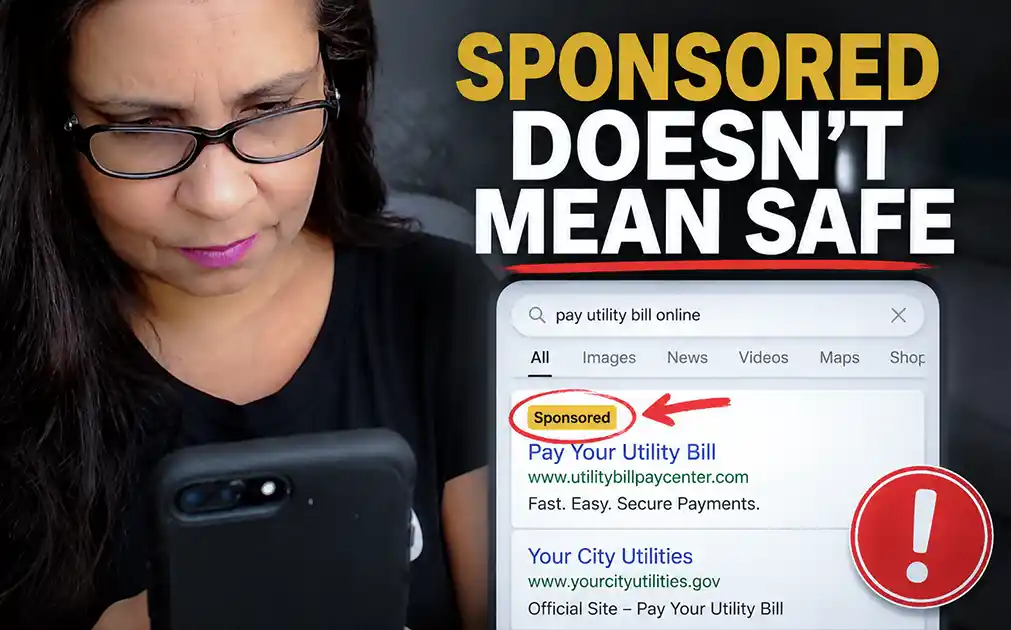
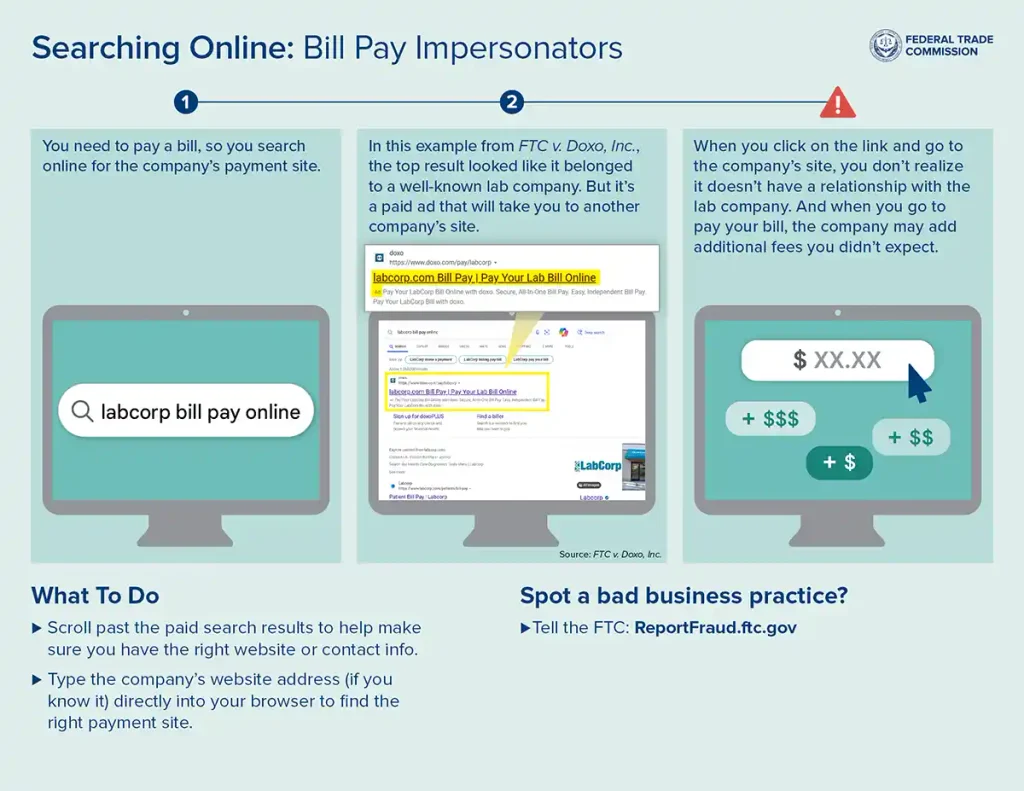
    The FTC recently warned consumers about bill-payment impersonators using sponsored search results. Someone may receive a suspicious email or text and do exactly what we have always told them to do: don’t click the link. Instead, they open a search engine and search for the company themselves.

    That is supposed to be the safe thing to do.

    But a paid result could lead them to a third-party payment site that looks like the company’s official payment channel. They could pay unexpected fees, be enrolled in a subscription they did not knowingly choose, or provide financial information to a business they never intended to use.

    So now even this familiar advice is no longer enough:

    “Don’t click the link. Search for the company yourself.”

    We apparently have to add more instructions to the instructions.

    I Have Watched Scam Advertisements Become More Convincing

    This is not the first time I have seen scammers use advertisements and familiar company names to attract victims.

    I previously made a video warning people about a fake Bed Bath & Beyond website. It used a company name people recognized and offered products at ridiculously low prices.

    I also warned people about a $47.98 mobility-scooter advertisement that appeared across social media. The kind of scooter shown in the advertisement can cost thousands of dollars. The price alone should raise questions, but the advertisement was especially upsetting because of the people it could attract.

    Someone who is elderly, disabled, or struggling financially might desperately need that scooter. They may want to believe they have finally found one they can afford.

    Scammers understand that.

    They understand our needs, our hopes, our habits, and the names of the companies we already trust. They use it all against us.

    I saw the same pattern with the viral Yeti cooler scam, which used the Sam’s Club name to make a fake giveaway seem trustworthy.

    I had already noticed fake videos, websites, and company advertisements on Facebook and other social-media platforms. Now scammy advertisements are appearing in paid results on Google Search, Bing, and potentially anywhere else that sells prominent search placement.

    They are following us from social media into the very places we were taught to use for safety.
    Sponsored Search Scams Can Make a Fake Website Look Real

    Most of us have been taught not to trust links in unexpected emails or text messages. If you need to contact your bank or pay a utility bill, search for the company yourself.

    That advice made sense.

    But what happens when the scammer is waiting for you in the search results?

    The FTC has also warned that outright scammers use paid search results to impersonate companies and government services

    They may use misleading descriptions, trusted names, official-looking websites, or telephone numbers that appear to belong to a legitimate organization.

    A sponsored placement may give a fake or misleading website a false sense of legitimacy. People may assume that if an advertisement appears prominently in a major search engine, someone must have checked it first.

    Unfortunately, we cannot afford to make that assumption.

    A safer approach is to use the company’s official app, a bookmark you previously verified, or a web address printed on a trusted bill or statement.

    The FTC also recommends scrolling past paid advertisements, typing a known company address directly into your browser, or using the website or telephone number printed on your bill.

    If you do use a search engine, carefully examine the web address before entering your username, password, account number, or payment information.

    If you encounter a suspicious advertisement, impersonator, or dishonest payment site, you can report it at ReportFraud.ftc.gov.

    But that brings me to another part of this that upsets me.

    More Businesses Are Pushing Us Online

    In my experience, more companies are pushing customers toward handling their business online.

    Customers may have limited options to pay by mail or speak with a real person. Some companies even charge an additional fee for making a payment by phone.

    This upsets me to no end.

    People are being pushed online to take care of important responsibilities, but the online world is becoming increasingly difficult to trust. We are told to be careful, inspect every link, verify every website, question every advertisement, and somehow recognize increasingly convincing scams.

    How much responsibility can we continue placing on the person who is just trying to pay a bill?

    I Especially Worry About Older Internet Users

    I worry about everyone, but I especially worry about my elderly friends who are just beginning to use the internet.

    Some are only now comfortable enough online to handle their basic responsibilities. They may know how to open a browser, search for a company, sign into an account, and make a payment.

    They have learned just enough to do what businesses now expect them to do.

    Then the rules change.

    We told them not to click links in suspicious messages. We told them to search for the company themselves.

    Now those results that used to lead to a trusted source now may lead you to an advertisement purchased by a dishonest business or impersonator.

    How is anyone supposed to know?

    And if I am being completely honest, this is not only about people who are new to technology. I consider myself a tech-savvy senior, and I know that I am also at risk.

    It is easy to become distracted because you are in a hurry. This distraction can confuse you this confusion will make you believe that you have reached the correct website.

    Knowledge may reduce the risk, but it doesn’t make any of us untouchable.

    What Comes Next?

    That is the question I keep asking myself.

    What else? What is next?

    Scammers are becoming more convincing. Artificial intelligence is making it harder to distinguish real images, videos, voices, and messages from fake ones. Familiar companies are being impersonated. Sponsored advertisements can lead people to websites they never intended to visit.

    Sometimes it almost makes me want to turn off my Wi-Fi and get rid of the internet altogether.

    Of course, that is not a realistic answer for most of us. The internet is too woven into our everyday lives. We use it to communicate, manage our money, make appointments, access important accounts, and take care of our families.

    But I am tired of feeling like nothing we do is enough.

    I am annoyed, upset and worry that it will never end.

    I wish I could stop these advertisements before anyone sees them, expose every fake website, and make every deceptive post disappear. But I know that is far beyond anything one person can do.What I do have is my ability to share what I see and speak out about it.

    And I will continue doing that for as long as I am physically and mentally able.

    If one warning helps one person stop before entering payment information into the wrong website, then speaking out still matters.
  • Someone Offered Me $9,000 in Crypto on TikTok

    Someone Offered Me $9,000 in Crypto on TikTok

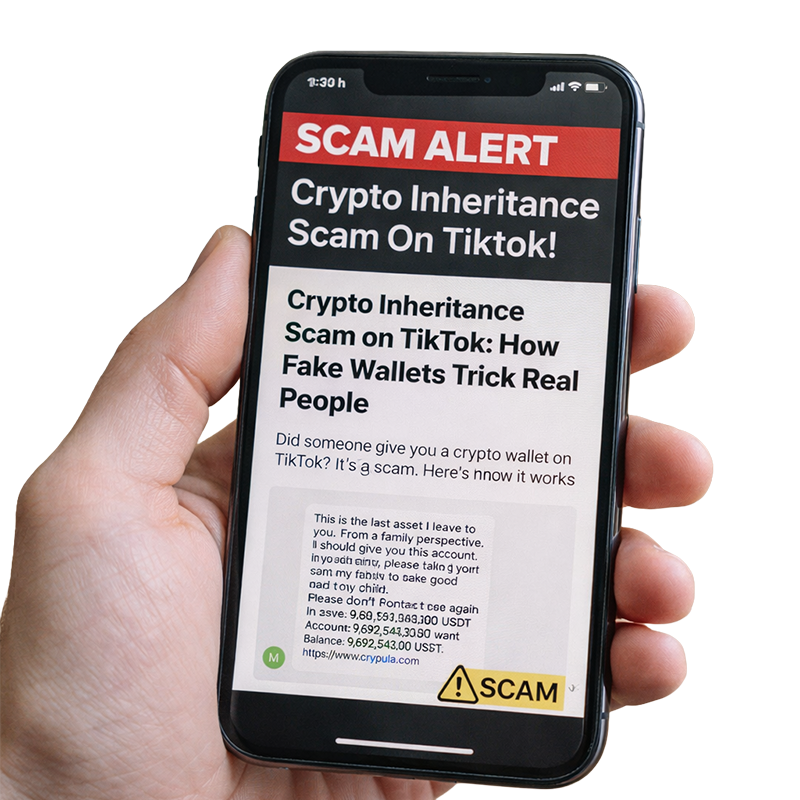
    TikTok Crypto Scam is making its way to you.

    If you spend any time on TikTok, Facebook, or Instagram, you’ve probably received strange private messages from people you don’t know.

    Some are harmless.

    Others are dangerous.

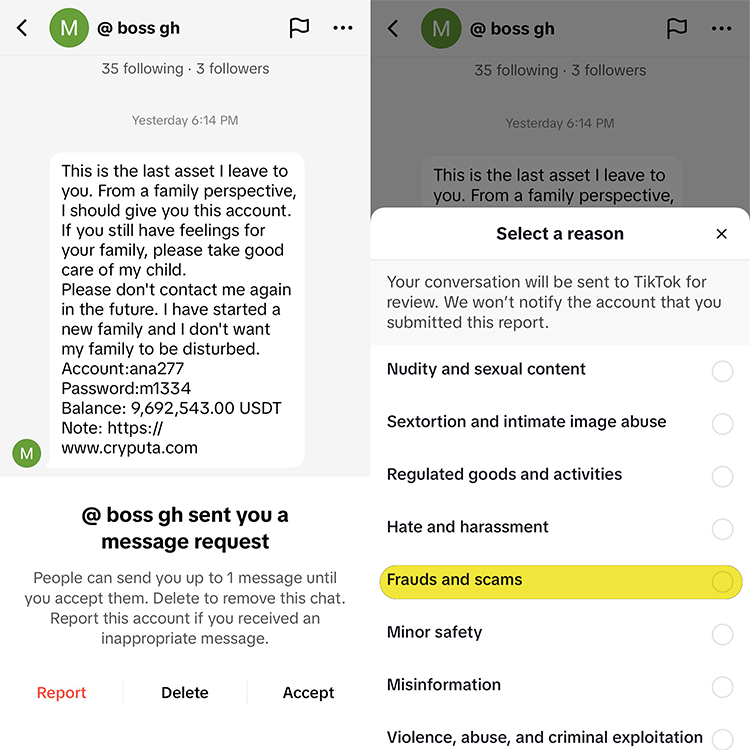
    Recently, I received a message on TikTok from a stranger claiming to “leave me” thousands of dollars in cryptocurrency. The message included a login, a password, and a supposed balance of over $9,000 in USDT.

    At first glance, it might look like luck.

    In reality, it was a carefully designed scam.

    This scam is sometimes called the crypto inheritance scam, the abandoned wallet scam, or the fake crypto account scam.

    It combines emotional manipulation with fake cryptocurrency websites to trick victims into sending real money.

    The scam usually starts with a private message that sounds personal and emotional.

    Common examples include:

    • “This is my last gift to you.”
    • “I’m sick and won’t be here much longer.”
    • “I started a new family and don’t want this anymore.”
    • “Please take care of my child.”

    The goal is simple:

    Make you trust the stranger before you think critically.

    How This TikTok Crypto Scam Works Step by Step

    Here is the exact process scammers use.

    1. They Send an Emotional Message

    The scammer pretends to be someone going through a personal crisis.

    They want you to feel sympathy, curiosity, or a sense of responsibility.

    Once emotions are involved, logic weakens.

    That’s human nature.

    2. They Provide “Login Information.”

    Next, they include:

    • A username
    • A password
    • A large crypto balance

    Providing login information makes it feel real.

    But legitimate financial accounts are never shared with strangers.

    Ever.

    3. They Send You to a Fake Crypto Website

    This message contains a link that appears to be a real crypto exchange.

    These sites are:

    • Newly created
    • Poorly regulated
    • Completely controlled by scammers

    They show fake dashboards with fake balances.

    Nothing on them is real.

    4. They Ask for a “Small Fee” to Withdraw

    When victims try to withdraw the money, the site suddenly says:

    • “You must pay a verification fee.”
    • “You must pay a gas fee.”
    • “You must pay tax first.”

    The amount is usually small at first — $50 to $300.

    Once you pay?

    The money is gone.

    No withdrawal ever happens.

    🚩 Red Flags in This Crypto Scam Message

    Here are the warning signs everyone should know.

    🚨 Red Flag #1: Strangers Offering Free Money

    Nobody gives away thousands of dollars to random people online.

    That alone tells you it’s a scam.

    🚨 Red Flag #2: Sharing Passwords

    Real investors protect their accounts.

    Scammers pretend not to.

    🚨 Red Flag #3: Unknown Crypto Websites

    Suspect all links trusted and untrusted!

    🚨 Red Flag #4: Emotional Pressure

    These scams use illness, family problems, or last wishes as a tool to manipulate victims.

    🚨 Red Flag #5: Requests for Upfront Fees

    Legitimate money does not require payment first.

    Never.

    This crypto scam targets seniors, new cryptocurrency users, widows and widowers, the lonely, and individuals facing financial stress. Scammers look for all those vulnerabilities and quickly find ways to exploit them.

    📸 Why Reporting and Documenting Matter

    I reported this message to TikTok immediately. To help promote awareness through this post, I included screenshots and the reporting, as shown in the top photo. The best way to stop scams is to be aware. Every time you share your experience, fewer people may fall for it, and if it helps only one person, that matters.

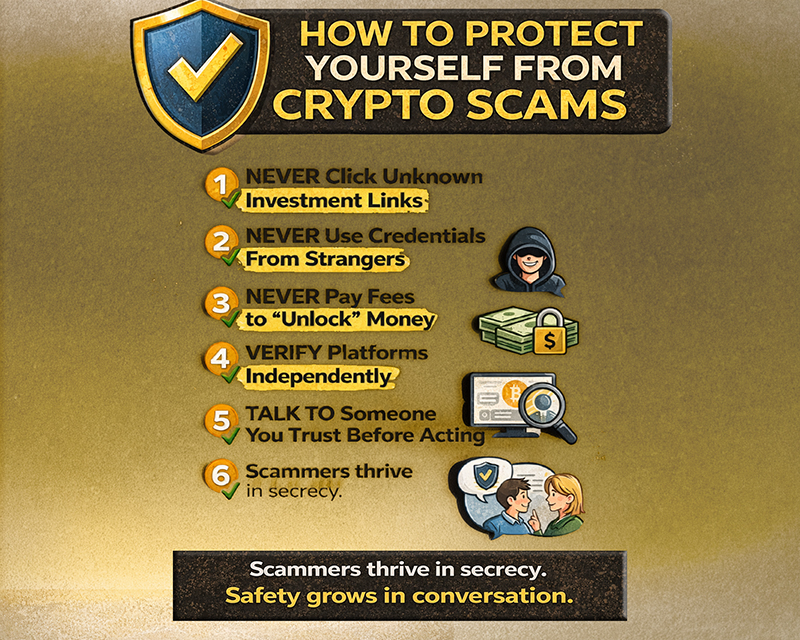
    🛡️Suggestions on how to Protect Yourself From Crypto Scams

    I want to mention it anyway.

    What you should never do:

    • Click on unknown Investment Links
    • Use Credentials from Strangers
    • Pay Fees to Unlock Money

    Things you should do:

    • Verify all information independently
    • Find and talk to someone you trust

    Scammers thrive in secrecy.

    Safety grows in conversation.

    📢 What To Do If You Receive a Similar Message

    If this happens to you:

    1. Do not reply
    2. Do not click links
    3. Take screenshots
    4. Report the account
    5. Block the sender

    Then warn others.

    You may save someone thousands of dollars.

    Scams Are About Psychology, Not Technology

    Most people think of scams as computer-related.

    They’re not.

    They’re about human behavior.

    They use:

    • Hope
    • Fear
    • Trust
    • Urgency
    • Curiosity

    Against you.

    The more you understand that, the safer you become.

  • Yeti Cooler Scam Warning

    Yeti Cooler Scam Warning

    Why I Called Sam’s Club to Verify This Viral Yeti Cooler Scam

    Yeti Cooler Scam posts are once again spreading across social media, promising “free” Yeti cooler bags and exclusive giveaways that seem too good to be true. When I recently saw one of these viral promotions making the rounds again, I decided not to assume anything. Instead, I did what I always encourage my readers to do: I verified it.

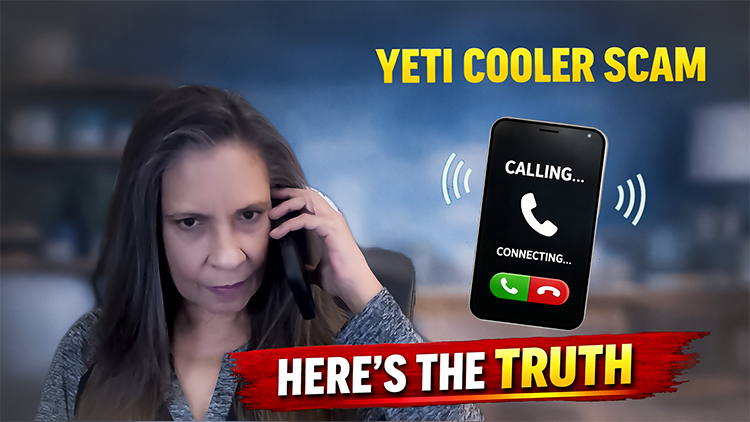
    This time, the situation was different. A viewer contacted me to let me know they called Sam’s Club and were told the promotion is real. I paused for a second, but instead of dismissing it, I picked up the phone and called the official customer service number listed on Sam’s Club’s website. Before calling, I compared the number the viewer gave me, and it was the same.

    This call confirmed what many suspected: this viral Yeti giveaway is not legitimate and is not affiliated with Sam’s Club in any way.

    Yeti Giveaway Scams and Fake Sam’s Club Promotions Explained

    Yeti giveaway scams follow a familiar pattern. A post suddenly appears on Facebook or other social media platforms claiming that a major retailer is giving away expensive cooler bags or outdoor gear. Often, the post will say something like “limited time, birthday celebration,” or “exclusive reward.”

    Clicking that link is where the danger begins!

    These fake Yeti promotions collect personal data, steal financial information, or sign people up for unwanted subscriptions. In many cases, victims never receive anything at all.

    In my video, you can hear me speaking to a Sam’s Club representative. The representative checked their system and confirmed that no such giveaway exists, and further warned me not to click any suspicious links or provide sensitive information.

    This type of phishing/scam continues to resurface because it works. Scammers change website names, logos, and wording to avoid detection. Today, it is a Yeti Cooler. Tomorrow it could be something else.

    How to Avoid Online Shopping Scams and Fake Yeti Scam Giveaways.

    What I have learned from this experience is that verification matters. In a digital world filled with Artificial intelligence, stolen logos, and fake testimonial scams, detecting them is hard, and soon it will be even harder.

    Anyone can create a convincing post or website in minutes.

    Here are a few simple rules I follow

    • First, verify promotions through official channels.
    • Second, do not click links in social media posts.
    • Third, never give personal or financial information.

    Businesses do not ask for sensitive information via suspicious links. Most scams rely on rushed clicks and emotional reactions. This Yeti cooler scam targets everyday people, especially seniors and families who may not be familiar with online fraud tactics.

    My Law enforcement years and time spent working in tech support have given me a suspicious eye for scams such as the Yeti Scam. I see too many people being taken advantage of. The viewer who sparked this phone call truly believed that the Yeti Giveaway was authentic. Scammers gain the trust of good, honest people like my viewers and use their reputation to attract other honest but vulnerable people to use as victims. By the time anyone realizes the digital bandit has taken off with their life savings.

    In Conclusion

    Yeti Cooler Scam is just one example of how modern scams evolve. By spreading awareness, encouraging verification, and fostering community support, we can stay ahead of them.

    Thank you for watching my videos, reading this post, and helping spread accurate information. Also, if you are a victim of a scam who came forward and shared your experience, I need to send you a very strong thank-you for your bravery.