
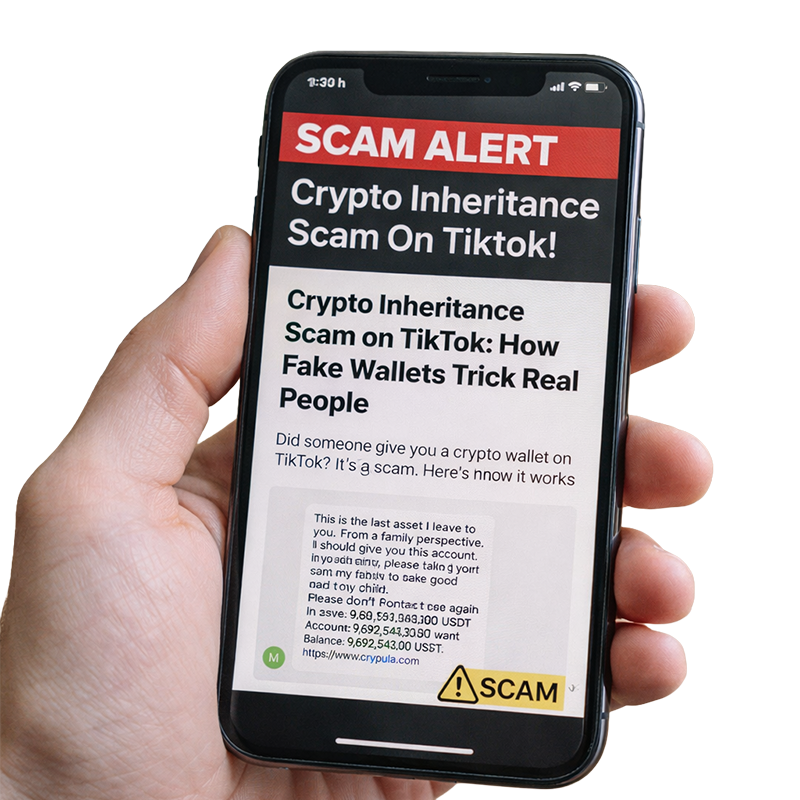
TikTok Crypto Scam is making its way to you.
If you spend any time on TikTok, Facebook, or Instagram, you’ve probably received strange private messages from people you don’t know.
Some are harmless.
Others are dangerous.
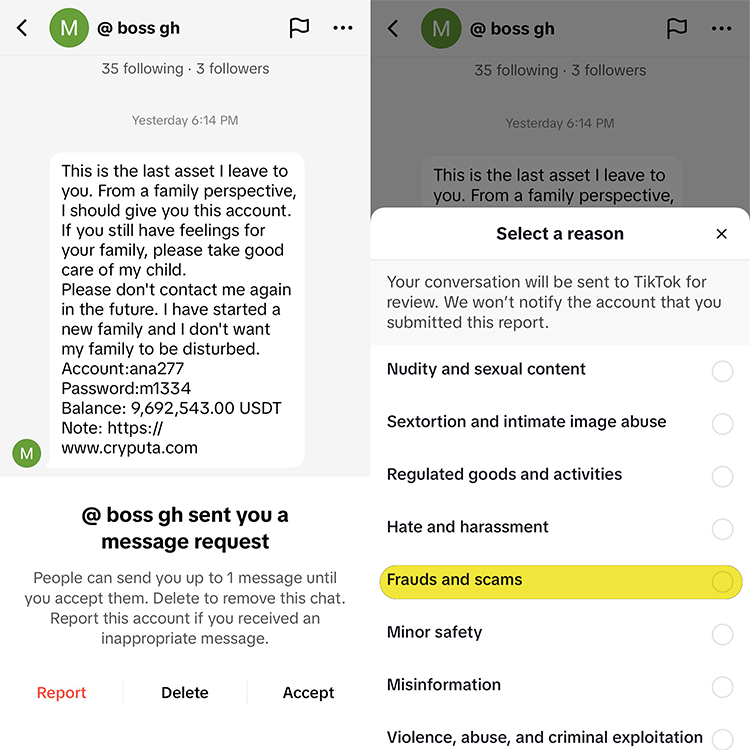
Recently, I received a message on TikTok from a stranger claiming to “leave me” thousands of dollars in cryptocurrency. The message included a login, a password, and a supposed balance of over $9,000 in USDT.
At first glance, it might look like luck.
In reality, it was a carefully designed scam.
This scam is sometimes called the crypto inheritance scam, the abandoned wallet scam, or the fake crypto account scam.
It combines emotional manipulation with fake cryptocurrency websites to trick victims into sending real money.
The scam usually starts with a private message that sounds personal and emotional.
Common examples include:
- “This is my last gift to you.”
- “I’m sick and won’t be here much longer.”
- “I started a new family and don’t want this anymore.”
- “Please take care of my child.”
The goal is simple:
Make you trust the stranger before you think critically.
How This TikTok Crypto Scam Works Step by Step
Here is the exact process scammers use.
1. They Send an Emotional Message
The scammer pretends to be someone going through a personal crisis.
They want you to feel sympathy, curiosity, or a sense of responsibility.
Once emotions are involved, logic weakens.
That’s human nature.
2. They Provide “Login Information.”
Next, they include:
- A username
- A password
- A large crypto balance
Providing login information makes it feel real.
But legitimate financial accounts are never shared with strangers.
Ever.
3. They Send You to a Fake Crypto Website
This message contains a link that appears to be a real crypto exchange.
These sites are:
- Newly created
- Poorly regulated
- Completely controlled by scammers
They show fake dashboards with fake balances.
Nothing on them is real.
4. They Ask for a “Small Fee” to Withdraw
When victims try to withdraw the money, the site suddenly says:
- “You must pay a verification fee.”
- “You must pay a gas fee.”
- “You must pay tax first.”
The amount is usually small at first — $50 to $300.
Once you pay?
The money is gone.
No withdrawal ever happens.
🚩 Red Flags in This Crypto Scam Message
Here are the warning signs everyone should know.
🚨 Red Flag #1: Strangers Offering Free Money
Nobody gives away thousands of dollars to random people online.
That alone tells you it’s a scam.
🚨 Red Flag #2: Sharing Passwords
Real investors protect their accounts.
Scammers pretend not to.
🚨 Red Flag #3: Unknown Crypto Websites
Suspect all links trusted and untrusted!
🚨 Red Flag #4: Emotional Pressure
These scams use illness, family problems, or last wishes as a tool to manipulate victims.
🚨 Red Flag #5: Requests for Upfront Fees
Legitimate money does not require payment first.
Never.
This crypto scam targets seniors, new cryptocurrency users, widows and widowers, the lonely, and individuals facing financial stress. Scammers look for all those vulnerabilities and quickly find ways to exploit them.
📸 Why Reporting and Documenting Matter
I reported this message to TikTok immediately. To help promote awareness through this post, I included screenshots and the reporting, as shown in the top photo. The best way to stop scams is to be aware. Every time you share your experience, fewer people may fall for it, and if it helps only one person, that matters.
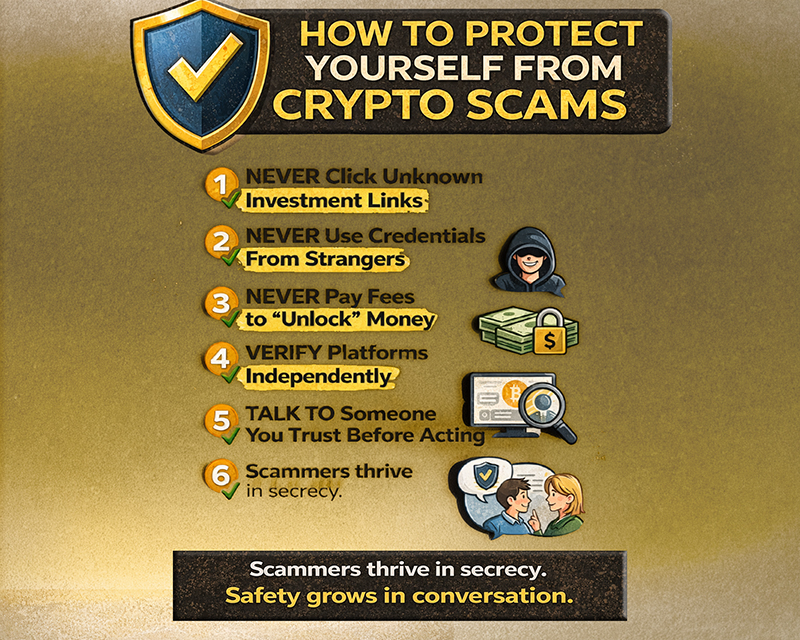
🛡️Suggestions on how to Protect Yourself From Crypto Scams
I want to mention it anyway.
What you should never do:
- Click on unknown Investment Links
- Use Credentials from Strangers
- Pay Fees to Unlock Money
Things you should do:
- Verify all information independently
- Find and talk to someone you trust
Scammers thrive in secrecy.
Safety grows in conversation.
📢 What To Do If You Receive a Similar Message
If this happens to you:
- Do not reply
- Do not click links
- Take screenshots
- Report the account
- Block the sender
Then warn others.
You may save someone thousands of dollars.
Scams Are About Psychology, Not Technology
Most people think of scams as computer-related.
They’re not.
They’re about human behavior.
They use:
- Hope
- Fear
- Trust
- Urgency
- Curiosity
Against you.
The more you understand that, the safer you become.